Lee Houghton / Speaking

Speaking

Talks that get leaders saying the real thing.

Interactive, funny and practical. Built from the everyday, with no jargon and nothing that needs translating on Monday. Two talks, for conferences, leadership events or one hour inside a meeting you already have.

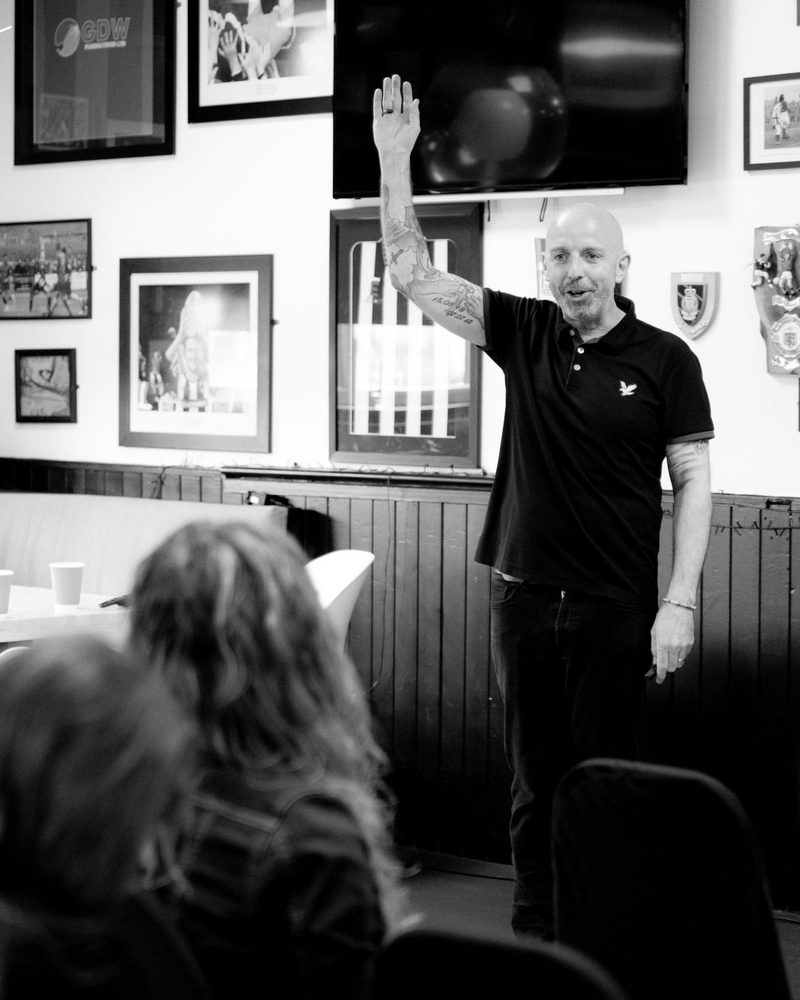
Lee Houghton on stage with his hand raised, getting the room involved Live on stage
Recent rooms
  • CCMA Contact Centre People Summit
  • CCMA CONNECT
  • Lean Competency System
  • Binnies Delivery Conference
  • NFU Mutual

The talks

Two talks. One idea underneath both: people follow people.

For leadership teams

Culture is the real BOSS

Behaviours Observed Set Standards

Culture is built in the corridor, the car park, and the meeting you didn't quite make on time. Not in the document that describes it. So the standard in your organisation is rarely the one you published. It is set every day by what your leaders do, and by what they are willing to walk past.

Who it suits: leadership teams and the in-house leaders who look after them, in HR, L&D and operations. Also works as a conference keynote on culture and leadership.

What the room leaves with

  • Who is really in charge. Why culture is set by what leaders do, not by what the strategy says.
  • The BOSS principle. Behaviours Observed Set Standards, and what that means for anyone who leads.
  • The conversation itself. The thing the team has been working around, said out loud in the room.
  • Commitments, in writing. One personal behaviour each, and what the team agrees to hold together.

Keynote, 30 to 40 minsWorkshop, 90 mins1 hour inside your meeting

Download the one-pager PDF

For improvement and change teams

There is no algorithm for trust

Why continuous improvement is still a human business

More tools, more data and more software than any improvement team in history. Now AI as well. And change is still about as hard to make stick. A method tells you what good looks like. It does not tell you whether the operator on nights believes you. People protect what they help to build. They do not protect what they are told to implement.

Who it suits: continuous improvement, operational excellence and change teams, and the leaders sponsoring a change programme. In person or virtual.

What the room leaves with

  • What trust means to each of you. Six people in a room, six different definitions. Until that is on the table, you are all agreeing about different things.
  • Saying is not landing. Why the same message, on the same shift, reaches two people completely differently.
  • With, not to. What changes when people help build the thing they are asked to run.
  • Commitments, in writing. One personal behaviour each, and what the group agrees to hold together.

KeynoteWebinar1 hour inside your meeting

Download the one-pager PDF
The hour inside your meeting

One hour. The conversation nobody has been having.

You already have a team meeting in the diary. I come into it, and we use the hour for the conversation that belongs in neither the away day nor the performance review. Every person leaves with a commitment in writing.

£500 plus VAT. Travel at cost, told to you up front.

Book the hour
  1. A 20 minute call first

    You tell me what your team is dealing with, so the hour is about your team and not a generic talk.

  2. The hour itself

    Inside a meeting you already have. In person, or virtually for the trust talk.

  3. A reflection sheet each

    Everyone's commitments are written down, so they leave the room with the people who made them.

  4. A 30 minute debrief

    Booked before I deliver, so we always talk about what came up and what it means next.

Conferences and events

Booking me for a bigger room?

Keynotes run 30 to 40 minutes and workshops 90 minutes, and both are built to get the room talking to each other, not just listening to me. Send me the date, the audience and the theme, and I'll come back with a price and a couple of ideas for how the session could land.

  • Slides: sent ahead so they drop straight into your running deck, and I bring my laptop as a backup.
  • After the event: you're welcome to share my slides with attendees.
  • Where: based in Lancashire, speaking across the UK.

“It proved that, by doing it differently, we can build trust, let the workforce feel listened to, and implement change, one step at a time.”

Attendee, Lean Competency System webinar There is no algorithm for trust

“Personally, the BOSS principle landed well with me. I am now a lot more conscious of my behaviours and how they could reflect on and perhaps influence the team.”

Joe Denver, Binnies Culture is the real BOSS

“I would love to have you for a breakout session for next year's conference.”

Pia Graham, Lean Competency System

What usually happens after a talk

  1. 1

    The talk

    People notice the everyday behaviours that are really shaping their culture, and say out loud the thing they've been working around.

  2. 2

    The next conversation

    The debrief. We work out what came up and what it means for your particular team, honestly, with no hard sell.

  3. 3

    Team coaching, if it's needed

    When the talk surfaces something the team needs help with, team coaching is how you practise different behaviours and make the change stick.

Got a meeting coming up?

Tell me what your team is dealing with and when your next meeting is.

Ask about a date